
The night the tent blew away
Updated: Mar 21

Our worst night of sleep in five thousand miles happened on Day 3.
Shan and I were camped at a marina in the Florida Keys - three days into our 3,000-mile journey from Key West to Canada - when a classic Florida thunderstorm rolled in. We'd already eaten and showered after a 35-mile day, so we settled under the campground shelter to watch. At first, it was almost pleasant: clouds gathering, rain coming down, lightning flickering distantly over the water. Then the sky changed - thunder cracked faster and closer - wind hit in hard, sudden bursts. The rain went sideways.
We laughed nervously at first, as the sky strobed across the water. At one point, Shan wondered aloud about the tent we'd left at our campsite - his tone far more casual than the situation deserved (the video captures this perfectly). By the time we were able to check on it, the storm had already done its work.
The tent was upside-down in a puddle, sleeping bags soaked through.
We righted it and climbed in for the night. The rain kept falling, and the rainfly stayed on, which meant no airflow, no relief from the Florida heat. Mosquitoes had found their way inside during the chaos and weren't leaving. We slept in sweaty, itchy stretches, waking more than we rested. It was a long, miserable night, and it was only Day 3. Our bodies hadn't adjusted to the daily mileage yet. The last thing we needed was a bad night of sleep.
The next morning, we shuffled forward anyway. Shan ran toward Homestead. I packed up our soggy gear and towed it behind my bike to meet him at the next stop. We felt like zombies. We probably looked like them, too.
That's what self-supported looks like.

Most people who run thousands of miles do it one of two ways.
The solo runner carries their own gear, usually in a stroller or trailer, they sleep wherever they can find shelter for the night, they eat whatever food and water they can carry. It's conceptually simple and brutally demanding in practice. Solo runners of this kind are rare: deeply athletic, deeply determined, and operating outside of what most people consider reasonable. They are beautiful, independent, adventurous badasses.
The more common way to cross the country is with a crew. Friends or family who drive the route in a support vehicle, keeping the runner fed, hydrated, and pointed in the right direction. They handle logistics, manage communications, document the journey. For record attempts, a crew is a precision operation - multiple vehicles, defined roles, all business.
Most runners, though, aren't chasing records. They're running for other reasons: raising money for charity, taking steps on their own healing journey, or pursuing a personal dream. The finish line matters, but it's really about the journey, the experience. A crew of one is enough. The daily miles are shorter. They look around. They take it in.
This is how Shan ran across the country in 2020 - intentionally, with time to take it in. Soaking up the scenery and the sunsets, recovering and reflecting at the end of each day. His friend Callie drove the campervan, kept him fed and healthy, managed logistics, ran miles with him when she could, and acted as expedition photographer. Together, they covered 3,255 miles from California to Connecticut, nearly 40 miles a day (Ref 1).
By the time he finished that trip, a seed was planted. I needed to do something like that.

When Shan and I started talking about doing our first big thing together, we landed on the East Coast Greenway - a developing 3,000-mile network of multi-use trails running from Key West to Calais, Maine. It was a route I had long wanted to cover by bike, so weaving a cycling component into Shan's next big run felt natural. We drew on what he and Callie had learned in 2020. Even though I watched every minute of his run, I had a lot of questions: about their daily rhythm, their sleep, their food, how they handled logistics. I also talked to friends who'd done bike touring. Eventually, we were ready.
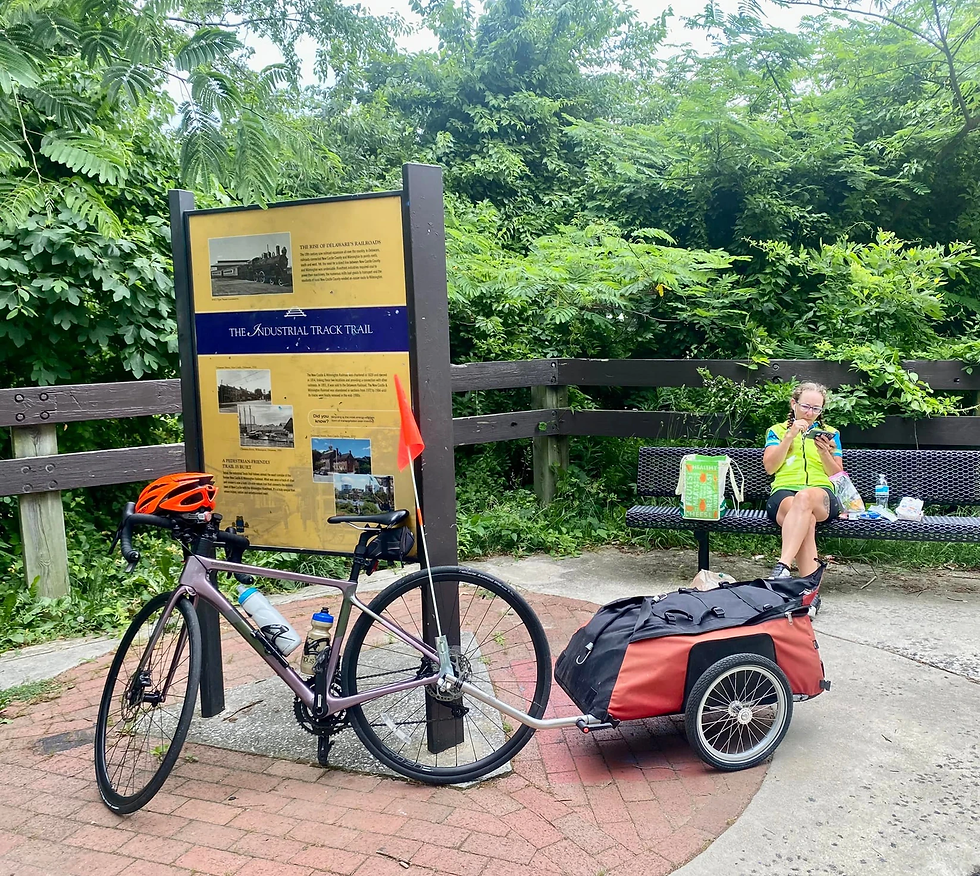
The plan: Shan would run. I would crew from the saddle, carrying our gear in a trailer hitched to my road bike. Runner and cyclist. Human-powered. Self-supported.
As far as we know, only two other teams have done anything like this at scale. Katie Visco and Henley Phillips - wife and husband - crossed Australia in 2019, Katie running and Henley carrying their gear by bike. Brothers Fritz and Max Sitte spent 301 days traveling from Cape Town to Cairo in 2024, Fritz on foot and Max hauling their gear on two wheels. And Shan and I have covered over 5,000 miles together (as of 2026) in the same way, covering the Erie Canalway Trail, the East Coast Greenway, and the Pacific Coast Bicycle Route.
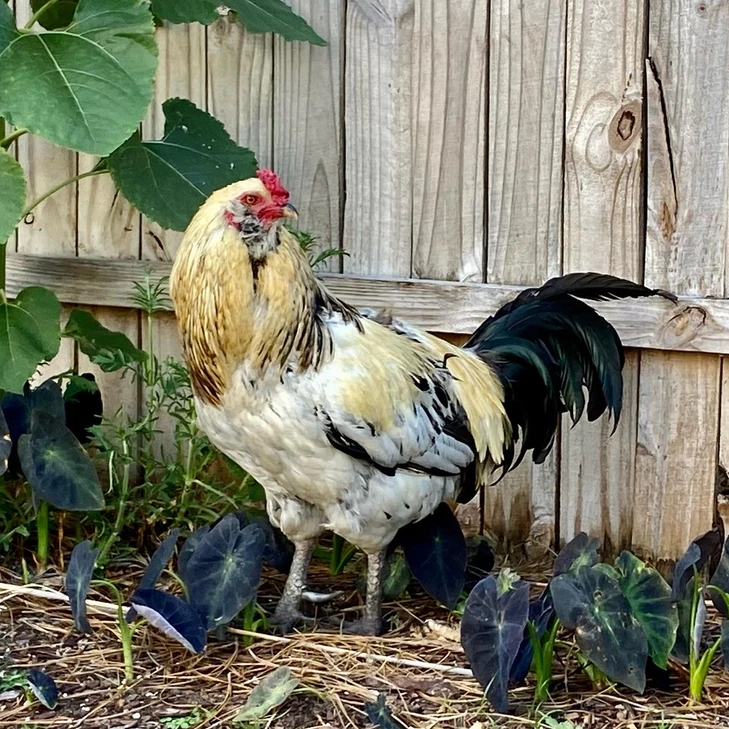
We have so many stories from those miles - cheap motels on Route 17 in South Carolina, curious dogs (some not so nice), and a rooster taking chase. We slept in a school bus one night and a shipping container on a farm another - alongside goats, cows, and another rooster who hadn't been briefed on our schedule.
The rainy night camping in the Keys was the first real test of our human-powered expedition model. In a campervan, you can close the door and wait out a storm. On a bike, you rescue your upside-down tent, accept the mosquitoes as roommates, and carry on.
We didn't know how unconventional our setup was when we started, but we're starting to understand it now.
References:


Comments